

## A Systematic Approach to Seal Selection
Selecting a mechanical seal requires matching five critical parameters to the exact process operating conditions:
### Step 1: Fluid Properties Analysis
Determine the chemical identity, viscosity, vapor pressure, crystallization tendencies, and particulate concentration. Clean, lubricating hydrocarbons behave vastly differently from abrasive slurries or hazardous acid solutions.
### Step 2: Operating Pressure & Velocity Limits (PV Value)
Calculate the Pressure-Velocity (PV) product at the seal faces:
- **Unbalanced seals:** Suitable for lower stuffing box pressures (typically below 10 bar / 145 PSI).
- **Balanced seals:** Hydraulically balanced to lower net face closing forces, allowing operation up to 25–40+ bar without wiping away the lubricating micro-film.
### Step 3: Seal Face Material Pairings
- **Silicon Carbide vs. Silicon Carbide:** Outstanding hardness and chemical resistance; ideal for abrasive slurries and harsh acids.
- **Carbon Graphite vs. Silicon Carbide / Tungsten Carbide:** The industry workhorse for clean lubricating fluids, providing low friction and forgiving dry-lubricating traits.
- **Tungsten Carbide vs. Tungsten Carbide:** Exceptional fracture toughness under heavy mechanical vibration or shock loads.
### Step 4: Single vs. Double (Dual) Cartridge Configuration
Single seals are cost-effective for non-toxic fluids where minor vapor leakage is acceptable. Dual cartridge seals (pressurized Plan 53A/53B or unpressurized Plan 52) are mandatory for hazardous chemicals, volatile VOCs, and heavy slurries.
### Step 5: API Piping Plan Integration
A mechanical seal is only as reliable as its support system. Integrating proper flush, quench, cooling, and buffer systems (such as API Plan 11, 23, 32, or 53) provides the required thermal stability.
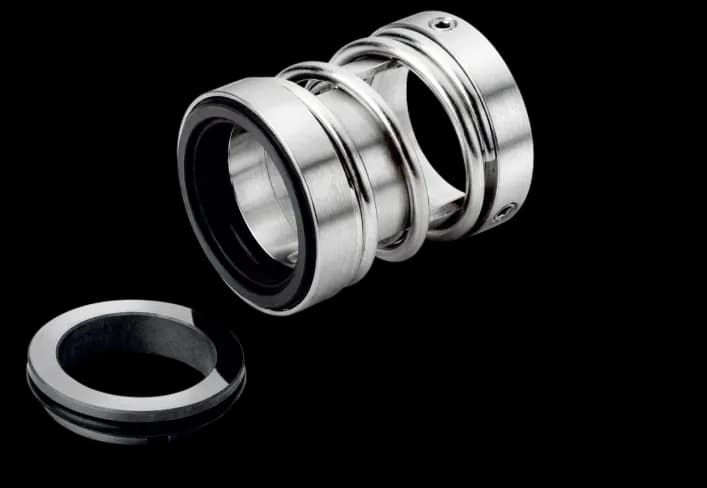
Mechanical Seals
February 04, 2026
How to Select the Right Mechanical Seal for Industrial Chemical Pumps
Authored by Rotating Equipment Specialist
Engineering Abstract
“A systematic 5-step engineering framework for evaluating fluid chemistry, pressure, temperature, face materials, and API flush plans.”
About the Engineering Technical Desk
Articles authored by S.H. ENGINEERING rotating equipment specialists, seal reliability consultants, and precision CNC machinists with hands-on severe industrial plant experience.
CONTINUE READING
Related Technical Guides
Mechanical Seals
February 18, 2026•6 min read
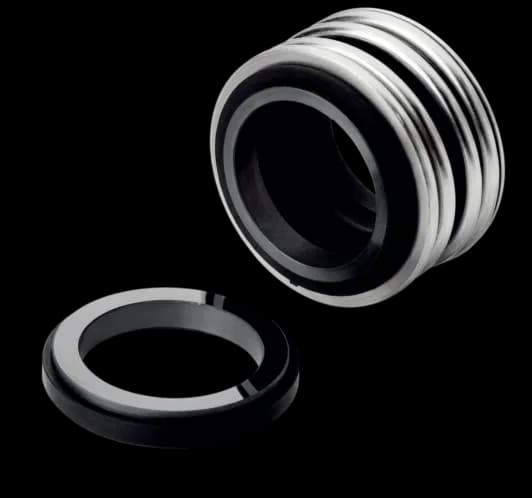
Mechanical Seal Failure: Common Causes and Prevention in Industrial Pumps
Over 80% of premature pump shutdowns stem from mechanical seal leakage. Learn how to diagnose dry running, thermal distortion, chemical attack, and improper installation.
Engineering Technical TeamRead Article
S.H. ENGINEERING ASSISTANCE
Need the Right Pump Component or Mechanical Seal?
Share your pump model, operating parameters, or component drawing with our technical team to receive tailored engineering guidance and a fast quotation.
2-4h Business Response
Drawings / Specs Accepted
Confidential Engineering Review