

## Why Mechanical Seals Fail Prematurely
In rotating industrial equipment, mechanical seals operate under extreme hydrodynamic forces. When seal faces fail, identifying the true physical failure mode is critical to preventing repeat occurrences rather than simply replacing parts.
### 1. Dry Running and Fluid Vaporization
When fluid film between the rotating and stationary faces flashes into vapor due to excessive heat or inadequate suction pressure (NPSHa < NPSHr), the faces run dry. This causes rapid thermal shock, heat checking (microscopic radial cracks on silicon carbide or tungsten carbide faces), and carbon face blistering.
**Remedy:** Ensure the seal chamber pressure exceeds the vapor pressure of the pumped medium by at least 1.5 to 2.0 bar, or employ an API Plan 11/13/21 flush to maintain constant liquid cooling.
### 2. Excessive Shaft Deflection and Misalignment
Shaft deflection exceeding 0.05mm (0.002") at the seal face causes uneven face contact, cyclical spring fatigue, and fretting wear under secondary dynamic O-rings. Common root causes include operating far to the left of the Best Efficiency Point (BEP) where radial hydraulic loads spike.
**Remedy:** Verify shaft runout and pump-motor alignment with laser tools. Avoid throttling pump discharge excessively without a minimum flow bypass.
### 3. Elastomer Degradation and Chemical Incompatibility
Secondary sealing elements (O-rings, gaskets, bellows) exposed to aggressive chemicals can swell, harden, extrude, or undergo chemical attack. Swollen O-rings hang up the seal face, preventing springs from keeping faces closed.
**Remedy:** Cross-reference fluid chemical composition and maximum operating temperature with elastomer compatibility charts (e.g., transitioning from FKM to FFKM/Kalrez or PTFE encapsulation).
### 4. Installation and Setting Errors
Component seals require precise axial setting dimensions. Overtightening set screws or miscalculating the stuffing box depth leads to excessive spring load, face overheating, and premature wear.
**Remedy:** Standardize on pre-assembled cartridge mechanical seals (such as the CS-100 series) which have factory-set locking clips that eliminate manual measurement errors during assembly.
Mechanical Seals
February 18, 2026
Mechanical Seal Failure: Common Causes and Prevention in Industrial Pumps
Authored by Engineering Technical Team
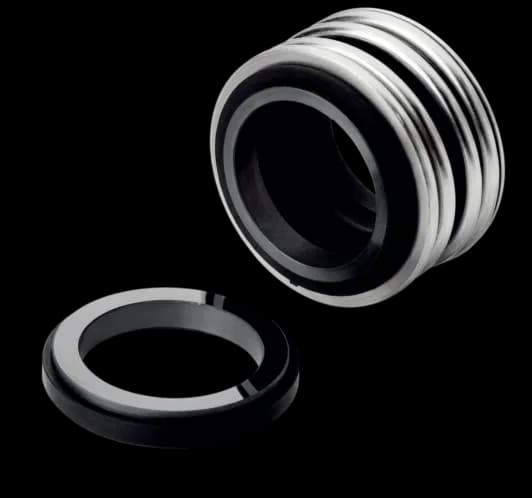
Engineering Abstract
“Over 80% of premature pump shutdowns stem from mechanical seal leakage. Learn how to diagnose dry running, thermal distortion, chemical attack, and improper installation.”
About the Engineering Technical Desk
Articles authored by S.H. ENGINEERING rotating equipment specialists, seal reliability consultants, and precision CNC machinists with hands-on severe industrial plant experience.
CONTINUE READING
Related Technical Guides
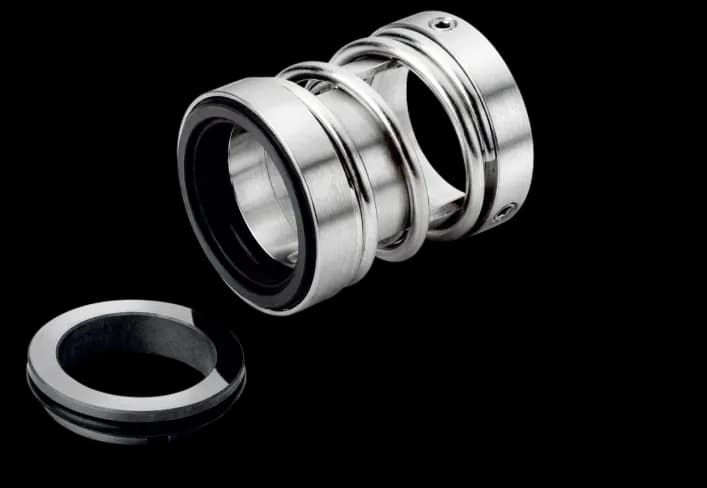
Mechanical Seals
February 04, 2026•7 min read
How to Select the Right Mechanical Seal for Industrial Chemical Pumps
A systematic 5-step engineering framework for evaluating fluid chemistry, pressure, temperature, face materials, and API flush plans.
Rotating Equipment SpecialistRead Article
S.H. ENGINEERING ASSISTANCE
Need the Right Pump Component or Mechanical Seal?
Share your pump model, operating parameters, or component drawing with our technical team to receive tailored engineering guidance and a fast quotation.
2-4h Business Response
Drawings / Specs Accepted
Confidential Engineering Review